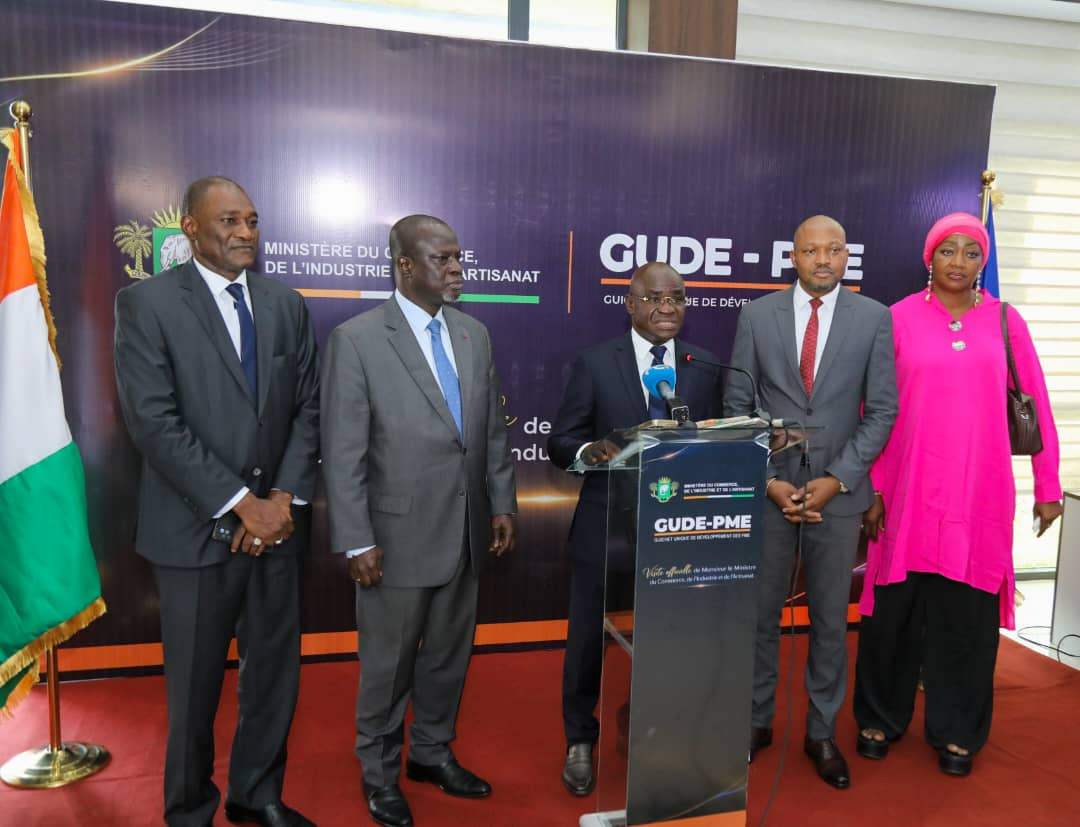
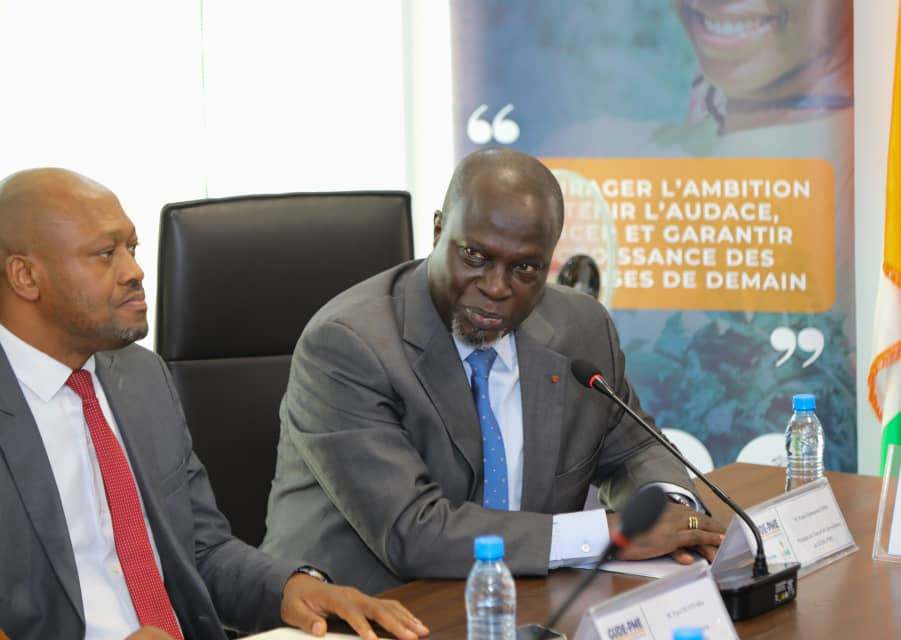
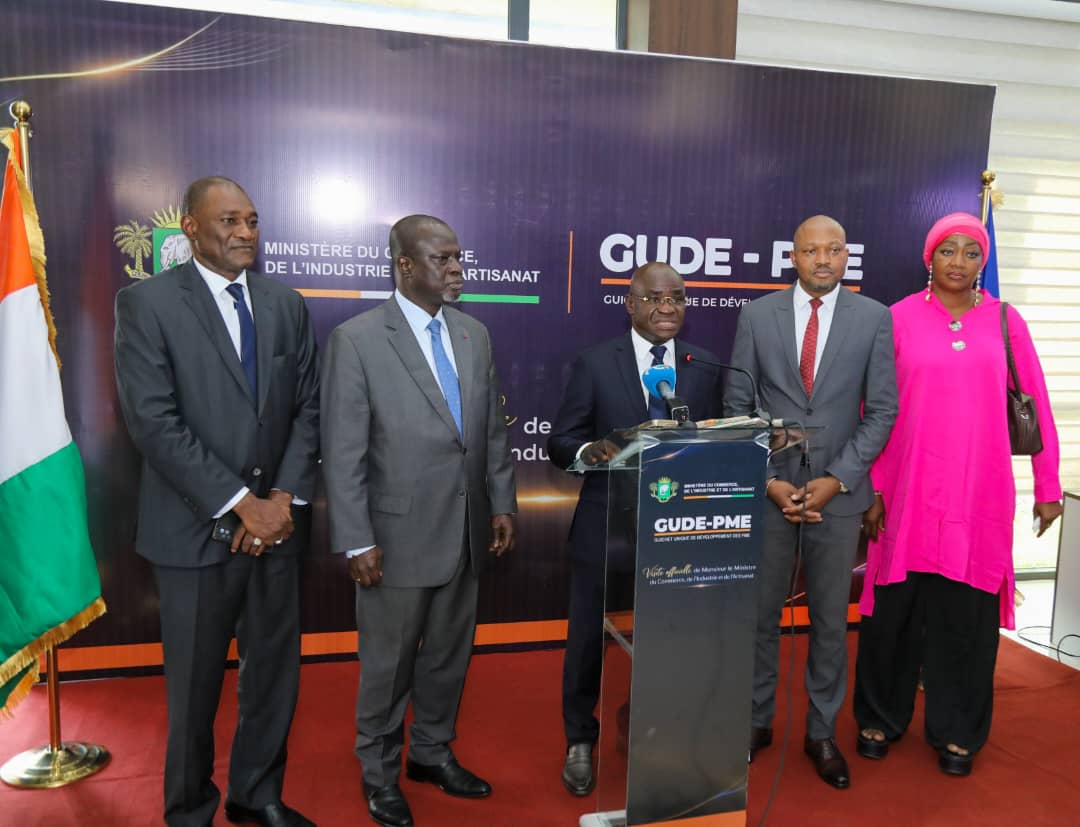
Kalil Konaté, Minister of Commerce, Industry, and Crafts, paid a working visit on Wednesday, March 4, 2026, to the One-Stop Shop for SME Development (GUDE-PME), located in the municipality of Adjamé. This visit is part of efforts to accelerate and optimize the national support system for small and medium-sized enterprises.
Following discussions with the organization’s leaders, the minister reaffirmed the government’s ambition to make GUDE-PME a strategic driver of economic transformation. “We want to complete the reform of the SME support system to make it a true instrument for the structural transformation of our economy,” he stated, emphasizing the need to make adjustments to strengthen the effectiveness, coherence, and performance of the support mechanism.
Created by Ordinance No. 2022-73 of January 26, 2022, the GUDE-PME aims to streamline and centralize public interventions in support of SMEs, while facilitating their access to financing. Given that these businesses account for more than 80% of the national business sector, the challenge is to ensure their sustainable growth and consolidate their contribution to wealth and job creation.
The minister praised the commitment of the Chairman of the Supervisory Board, Esmel Emmanuel Essis, for his constant support, as well as the dedication of the management team. “I would like to congratulate the Chairman of the Supervisory Board, who has provided me with valuable information and support since I took office,” he said.
He also emphasized the government’s goal of increasing the industrial sector’s contribution from 22.7% to 30% of GDP. “This goal must be supported by effective technical and financial instruments, notably the GUDE-PME and the SME Credit Guarantee Corporation,” he noted.
Presenting the institution’s track record since it became operational in December 2022, Director General Yaya Ouattara highlighted significant results: more than 20,000 SMEs supported and more than 3,000 businesses receiving cumulative financing of over 57 billion CFA francs, thanks to guarantee mechanisms covering between 50% and 80% of the credit risk.
In this regard, the minister announced that a memorandum will be sent to the Prime Minister to finalize the ongoing reform and strengthen coordination among public agencies responsible for SMEs. “We will ensure that the steering committees effectively report to the agencies responsible for SME development,” he concluded, reiterating his congratulations to the Director General and his entire team for the work accomplished.